
Colonial Defense Does Not Justify Genocide
Why Trump’s Cease-Fire Deal is Only Another Loop in the Colonial Cycle of Zionist Expansion

Donald Trump’s claim of peace in the Middle East has come at a surprising time. Amidst a government shutdown that’s hurting millions of Americans daily with no end in sight, and rising protests against ICE deportations and occupations throughout his own country, Trump has managed to end the genocidal war between Israel and Hamas. At least that’s the claim, for now.
Of course, peace within the Israel/Palestine divide has never been a reality. Israel was established as a colonial state and continues to drive occupation further into territory that they have no claim over—it has done so for almost 80 years now.
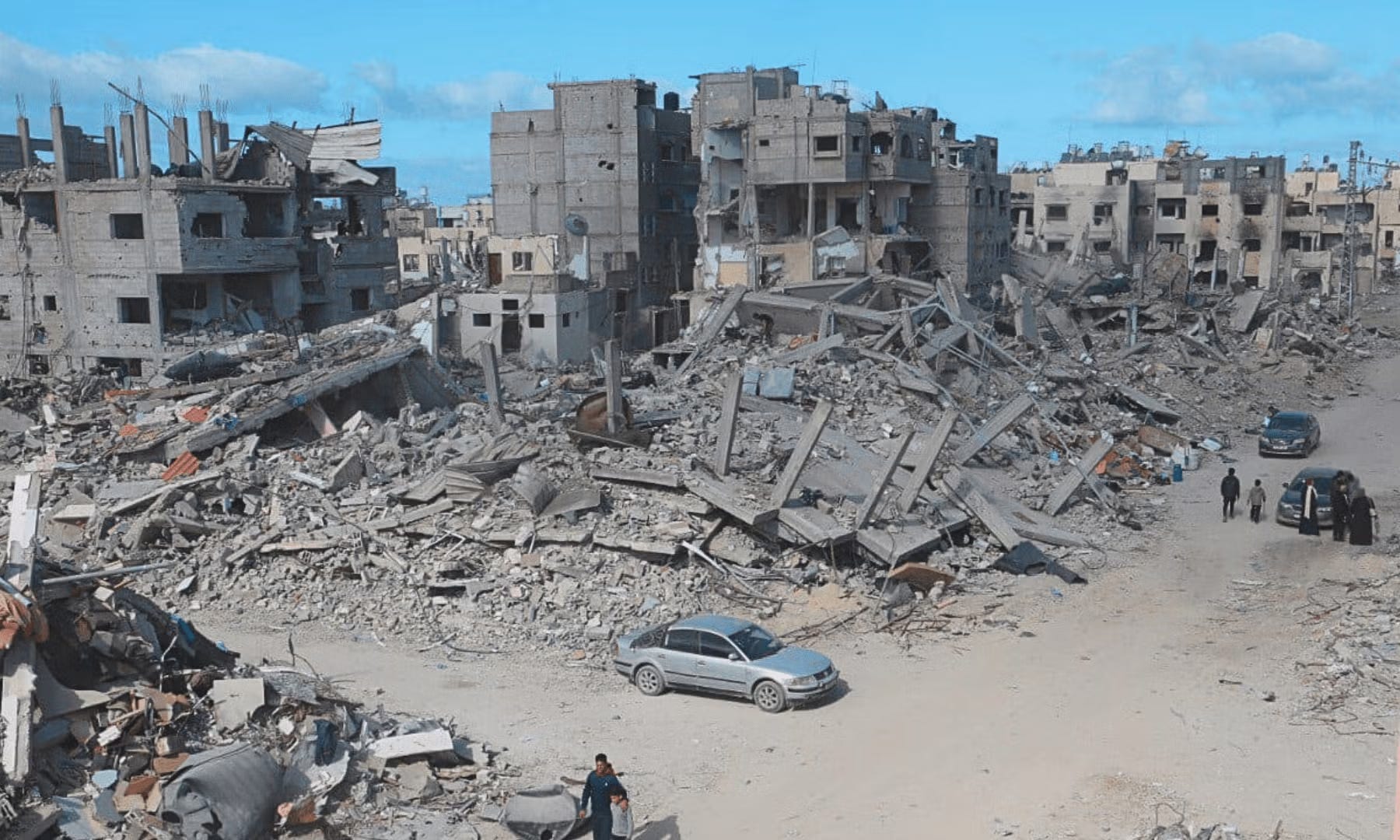
So why is this ceasefire being celebrated? And why is there such a lack of coverage on the future of Gaza and the Palestinians who live there?
Historic Expansion
The history of war and violence in the area must first be made clear. Palestine grew out of the Ottoman Empire, put under UK administration in 1917, among the other states included in the territory—each of the other states eventually assumed their own independence, but Palestine was subject to the Balfour Declaration, stating that it would be the home of a new Jewish state. Jewish Immigration then began en masse, increasing as World War II took shape and persecution of Jewish people reached an all-time high under the Nazi regime. However, Arab calls for independence rose at the same time, and a 1937 rebellion began inspiring violence from both the native people and the new immigrants, moving the issue of statehood from the UK to the UN.
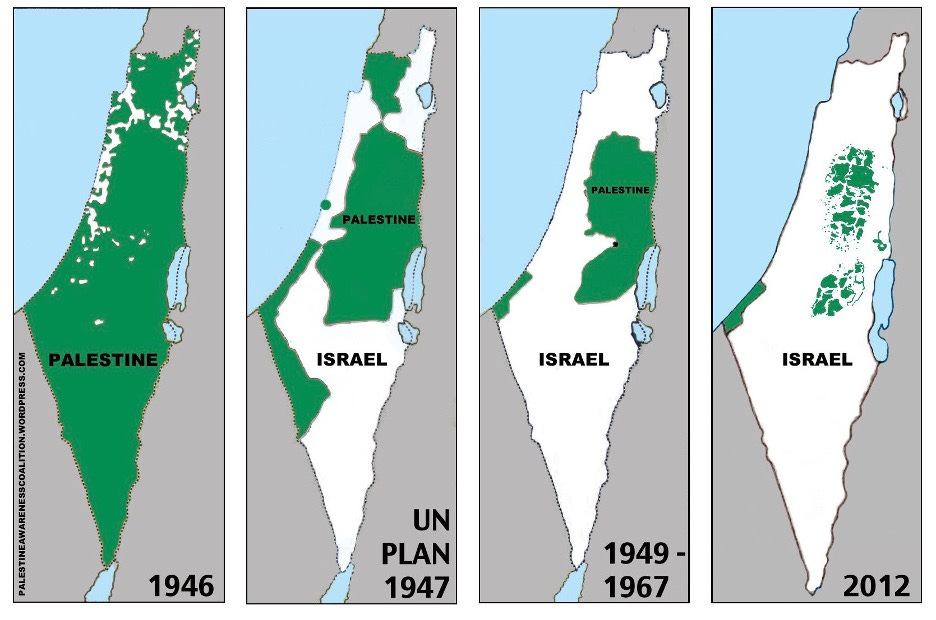
The original plan envisaged two independent states within the disputed territory, though in 1947, Israel proclaimed independence and grew to occupy 77% of the state, resulting in half of the Palestinian Arab population fleeing or being brutally expelled. Again in ‘67, Israel attempted to expand into the West Bank and the Gaza Strip during a war with the neighboring Arab nations, which it had invaded, but was ultimately pushed back according to UN resolutions. Half a million Palestinians were, again, expelled, even though the territory was retained. A third round of violence followed in ‘73, after which the UN declared Palestinians a people with inalienable rights and sovereignty, exhibiting their right to return to the state and a claim of national independence.
However, Israel failed to understand this and continued its work of expansion. In 1982, they invaded Lebanon, vowing to end the Palestinian Liberation Organization (PLO), resulting in more recognition from the UN of Palestinian rights in ‘83 and a Palestinian State without expressed consequences for Israel after their consistent disregard for human life in an area they claimed to now have rights to. Palestine took matters into its own hands, and in ‘87 a mass uprising began, now called the first Intifada, which ultimately resulted in an exponential loss of life and injury to the Palestinian people, because of Israel’s retaliation tactics.
There was almost a conclusive deal in 2001 called “The Oslo Accords” which would’ve settled on a two-state solution, though it was ultimately inconclusive—US President Bill Clinton played a major part in the creation and negotiation of this peace deal, pulling the US into mediation ever since with the Israel/Palestine state. A second intifada took place after this, spurring Israel to build a wall throughout some occupied Palestinian territory, where they could lay permanent claim on the land and set up checkpoints that further divided non-Israelis.
Throughout these conflicts, two powers emerged in Palestine: The Palestinian Authority (PA) and Hamas. The PA was elected officials doing their best to support the rights of Palestinians, whereas Hamas was a designated terrorist group fighting back against occupation and violence. Ultimately, Hamas gained control of the Gaza Strip and the PA prevailed in the West Bank, both of which were continually under threat of expansion from Zionists. Through the 2000s, the PA fought for statehood recognition, having to wade through trenches of new settlements from Zionists who felt the land was their religious right, and therefore claimed it in whatever way necessary.
While Hamas kept itself propped up in the Gaza Strip, it was due in large part to a now confirmed report of money funneled in by the Netanyahu administration, which wanted to keep the more democratic PA from gaining a foothold and uniting the Palestinian populations. This, of course, resulted in the attacks on October 7th that left over 1,200 Israelis dead and 251 captured. To which Israel responded with a continual onslaught of violence, with disregard for civilian life or international law, claiming it was a justified response.
The Right To Genocide?
That massive history, though it reads like a textbook, is extremely important for understanding the conflict and why the current state of Gaza is an even more important issue than the cease-fire deal.
Israel’s explicit goal, backed by 80 years of proof, is to expel the Palestinian people from their homes and claim it completely. There are sites dedicated to encouraging more settlers who will bulldoze inhabited homes in the West Bank to make room for themselves, Zionists are cheering at the women and children killed in Gaza over the past two years because it means more room for themselves, there is an increasingly violent rhetoric being projected not just by military leaders in Israel but across the globe by people who find the “other,” as their enemy.
This cease-fire is not a deal for peace. It is a proclamation of victory for Israel, which has completed its destruction of the Gaza Strip. And Donald Trump knows this—the cease-fire presents an opportunity to further Western interests in the Middle East through the removal of anything else. Anything, or anyone, that supports something other than white Christian nationalism is subject to the very same violence. Trump has made this explicitly clear with this plan.
Nothing remains of the buildings and streets and homes and schools that once stood there—people are returning to rubble without food, or water, or any of their human rights, and we are meant to celebrate that? These people are returning “home” to find rubble, to find themselves brutally expelled, once again, from a state that they are historically rooted in.
Yes, the Rafah border should be opened to allow aid into the region, yes, the hostages should be returned home, and yes, of course, no one deserves to be attacked. Violence is not an answer, in any situation, but when years of colonial destruction are enacted on your people and your homes, what are you meant to do? When no one listens to the cries for help, the videos of bulldozers razing people’s homes to the ground as the residents stand nearby, watching, what are you supposed to do? When the countless media that have been broadcast as a way of empathizing, of establishing a common humanity, go unseen, unread, and unheard, how else can you reach out?
Clearly, the world is a sick place, but colonization has no bearing on the rights to a specific sector of land. Religious claim on land has no hold in a secular world. And violence to promote that “right” clearly undermines whatever justification may be bouncing around within the head of the gunman. If we are to support a violent response to violence, where do we find an end? And if the Israeli state began as a colonial project, as is clearly demonstrated in its historical expansion, why then do they have the right to defense, and Palestinians do not?
Palestinian Deaths: over 67,000 in Gaza, over 1,000 in the occupied West Bank
Israeli Deaths: about 2,000
Palestinian Media: